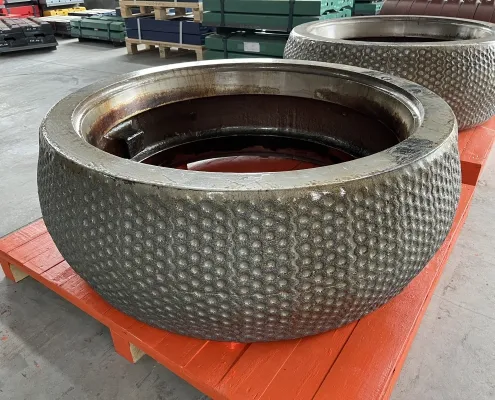

Many plant managers tell me the same story. Their high-chromium sleeves wear fast, crack early, and force shutdowns at the worst time. I had the same trouble in my early years. Ceramic-metal composite sleeves changed that pattern for my customers.
Ceramic-metal composite roller sleeves achieve 2–2.5x longer life by combining very hard ceramic zones for wear resistance with a tough metal matrix for impact resistance, plus strong metal–ceramic bonding that stops cracks, spalling, and fast material loss under heavy grinding.
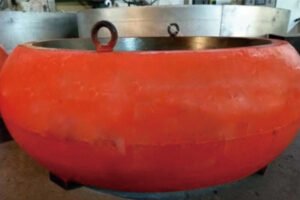
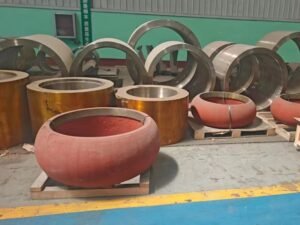
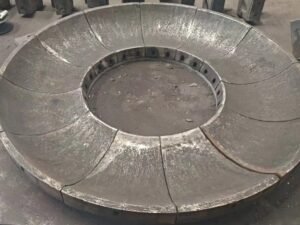
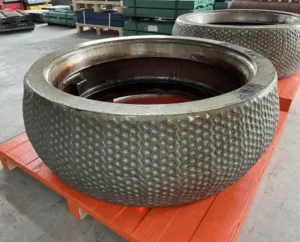
ceramic-metal composite roller sleeve
In this article I explain, step by step, how the composite design works inside the sleeve. I share real field ideas from mills I have followed for years. You will see how service life, stability, and cost per hour change when you move from traditional high-chromium sleeves to composite sleeves.
What makes my ceramic-metal composite roller sleeve more wear-resistant than high-chromium sleeves?
Many people think more chromium always means better wear life. I thought the same when I started. Then I saw some “high-chrome” sleeves die early under hard clinker and slag.
Composite sleeves are more wear-resistant because hard ceramic inserts take most of the abrasive load, while the metal matrix supports them. The ceramic phase resists two-body and three-body abrasion far better than high-chromium iron or weld overlay alone, so the overall wear rate drops sharply.
How the composite structure changes wear
In a high-chromium sleeve, the whole wear surface is one alloy. When hard particles cut the surface, the material has no “back-up” phase to share the load. In a composite sleeve, I design a hard ceramic skeleton inside a tough metallic body. The ceramic blocks cutting and micro-ploughing, while the metal carries impact.
| Ominaisuus | High-chromium sleeve | Ceramic-metal composite sleeve |
|---|---|---|
| Main wear-resistant phase | Carbides in iron matrix | Discrete ceramic inserts / particles |
| Hardness of main wear phase | High, but limited | Very high (ceramic) |
| Toughness of surface | Moderate to low | High (from metal matrix) |
| Response to abrasive particles | Faster groove formation | Less cutting, more rolling / sliding of particles |
| Typical service life | Baseline | 2–2.5x baseline in similar conditions |
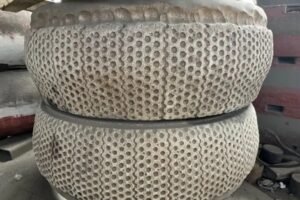
In one cement plant I worked with, the clinker line changed from high-chrome sleeves to composite sleeves. The visual wear pattern after 6,000 hours was completely different. The composite surface still had clear ceramic “islands,” while the old sleeves were already deeply grooved at half that time.
How does the ceramic-metal bonding strength affect my roller sleeve’s lifespan?
I have seen beautiful ceramic inserts on drawings fail on the first campaign. The reason is simple. The ceramic did not stay in place.
Strong metallurgical bonding between ceramic and metal is critical. Good bonding locks the ceramic into the matrix so it does not fall out, crack away, or spall, which keeps the protective surface intact and extends sleeve life significantly.
Why bonding quality decides real life
Many early composite designs used only mechanical anchoring or weak bonding. Under real VRM loads, the interface became the weak layer. Micro-cracks started at the gap between ceramic and metal. Once the first inserts dropped, wear accelerated very fast.
In my design work, I focus on metallurgical embedding. The molten alloy wraps the ceramic parts and infiltrates small surface features. This creates a tight, continuous contact.
| Bonding Aspect | Weak bonding result | Strong bonding result |
|---|---|---|
| Interface gaps | Present, act as crack starters | Minimal, smooth load transfer |
| Ceramic drop / spalling | Common after impact or thermal cycling | Rare, ceramic stays locked in |
| Stress distribution | Concentrated at edges | Spread into metal matrix |
| Surface protection over time | Rapid loss of ceramic areas | Stable ceramic coverage for most of the life |
In one coal mill case, early composite sleeves from another supplier lost 20–30% of their ceramic after 2,000 hours. After we changed to a sleeve with strong metallurgical bonding, ceramic loss was almost zero over a full campaign. The life jump was over two times.
Why do my traditional VRM roller sleeves crack while composite sleeves avoid failure?
Many customers call me only after a sudden crack. The mill is down. Everyone is under pressure. They ask why the high-chrome sleeves broke so early.
Traditional VRM sleeves crack because they are hard but not tough enough, so stress and thermal shock create long brittle cracks. Composite sleeves use a tougher metal matrix and stress-buffering ceramic distribution, which slows crack initiation and stops crack growth.
How composites control crack initiation and growth
High-chromium iron has high hardness but limited toughness. Under high load, vibration, thermal cycling, and occasional foreign bodies, the material can start a micro-crack. Once the crack starts, it has a straight, continuous path through the brittle structure.
In a metal-ceramic composite, I use the opposite idea. The tough metal matrix surrounds the ceramic zones and absorbs sudden impact. The ceramic phase is arranged so it does not create a long, straight weak line.
| Tekijä | High-chromium iron | Ceramic-metal composite |
|---|---|---|
| Halkeaman syntyminen | Easier under impact / shock | Harder due to tougher matrix |
| Crack path | Straight, continuous | Deflected by interfaces |
| Micro-crack propagation | Nopea | Slowed, often stopped |
| Response to foreign bodies | High risk of sudden failure | Better chance to survive the event |
I remember one slag grinding line where cracks killed three sets of traditional sleeves in a row. After switching to composite sleeves, the mill saw only minor surface chipping after similar events, with no through-cracks in more than 8,000 hours.
How can a composite sleeve reduce my mill’s downtime and maintenance cost?
When I visit plants, the biggest hidden cost is not the sleeve itself. It is the shutdown: lost tons, overtime work, and unplanned spare parts.
Composite sleeves reduce downtime because they last longer, keep their profile, and avoid sudden cracks or spalling. This means fewer change-outs, more planned maintenance, and lower total maintenance cost per year.
Turning longer life into real money
A sleeve that lives 2–2.5x longer does more than save one purchase. It also cuts the number of shutdowns. I usually sit with maintenance and production teams and map the full cost.
| Kohde | Traditional sleeves | Composite sleeves |
|---|---|---|
| Typical service life (hours) | 3,000–5,000 | 6,000–10,000 |
| Annual change-outs | 2–3 | 1–1.5 |
| Unplanned shutdowns from cracks | Medium to high | Erittäin alhainen |
| Labor + crane + tooling per change | Korkea | Fewer events, lower total |
| Production loss during change | Korkea | Fewer stoppages |
With composite sleeves, you can often align sleeve replacement with other major stops. So you avoid extra shutdowns just for the rollers. One power plant client told me that after changing to composite sleeves, they removed one full planned maintenance stop from their yearly schedule. The payback came not only from wear life but from smoother planning.
How does a ceramic-reinforced microstructure improve my mill’s grinding stability?
Many mills do not fail by cracking. They slowly lose shape. The rollers become uneven. Vibration goes up. Operators fight the mill every shift.
A ceramic-reinforced microstructure keeps the roller profile more stable over time. The hard ceramic skeleton slows uneven wear, so grinding pressure, vibration, and product fineness stay more stable across the whole sleeve life.
What microstructure means for vibration and product quality
In a uniform high-chromium sleeve, local hot spots, material flow patterns, and feed conditions can cause uneven wear. One side of the sleeve wears faster. The contact pattern changes, and vibration rises. I often see operators reduce feed or change parameters just to stop alarms.
In a composite sleeve, I design the ceramic distribution to create a more rigid, wear-resistant “grid.” This grid supports the surface and maintains shape.
| Stability Aspect | High-chromium sleeve | Composite sleeve |
|---|---|---|
| Surface profile change | Faster, often uneven | Slower, more uniform |
| Vibration trend vs hours | Rises sooner | Flatter for longer |
| Need for parameter correction | Usein | Less frequent |
| Impact on product fineness | More fluctuation | More stable particle size distribution |
In one VRM I followed, the operation team reported that after 4,000 hours on composite sleeves, the mill still ran at original vibration levels. Before, they had to lower output by 5–8% after 3,000 hours to stay within limits.
Can a composite roller sleeve help me handle harder materials like clinker or slag?
Many plants change their raw mix or fuel. Suddenly the material is harder or more abrasive. The old sleeves cannot keep up.
Yes. Composite sleeves are very suitable for hard, abrasive materials like clinker and slag. The ceramic phase takes the cutting action from these hard particles, while the metal matrix carries the heavy load and impact.
Matching the composite design to material hardness
Not all composite sleeves are the same. For very hard materials, I increase the ceramic content or choose ceramic types with higher hardness. I also adjust the pattern of inserts to protect the highest load zones.
| Material Type | Wear Challenge | Composite Design Response |
|---|---|---|
| Klinkkeri | High hardness, sharp particles | High ceramic fraction, dense surface pattern |
| Kuona | Very abrasive, sometimes tough | Very hard ceramic, tough matrix composition |
| Limestone / soft raw | Lower hardness | Lower ceramic fraction, more cost-efficient |
| Hiili | Impact + some abrasion | Balanced ceramic and matrix toughness |
In a slag grinding project, the plant’s high-chrome sleeves lasted only 2,500–3,000 hours. After switching to ceramic-metal composite sleeves tailored for slag, service life increased to more than 7,000 hours in similar operating conditions. The mill also saw fewer roller surface repairs between campaigns.
How does using composite sleeves lower my cost per operating hour?
Purchase price is only one part of the story. When I sit with purchasing and finance teams, they want to see cost per ton or cost per hour, not only the invoice.
Composite sleeves lower cost per operating hour by combining longer life, fewer shutdowns, and less repair welding. Even if each sleeve costs more, the total cost divided by hours or tons is usually much lower than for high-chromium sleeves.
Simple way to compare economics
I often use a simple table with customers. We plug in their own numbers. You can do the same.
| Kohde | Traditional sleeve | Composite sleeve |
|---|---|---|
| Sleeve cost per set | 1.0× | 1.3–1.6× |
| Average life (hours) | 4,000 | 8,000 |
| Change-outs over 8,000 hours | 2 | 1 |
| Total sleeve cost over 8,000 h | 2.0× | 1.3–1.6× |
| Downtime + labor cost factor | Korkeampi | Alempi |
| Cost per operating hour (all-in) | Baseline | 40–50% lower typical |
When I use real plant data, the result is very clear. Even with a higher initial price, the composite option almost always gives the lowest cost per hour, especially where unplanned stoppages are expensive.
What performance improvements can I expect after upgrading my VRM with composite sleeves?
Many customers ask me not only about life, but about performance. They want to know what will change in daily operation.
After upgrading to composite sleeves, you can expect longer stable operation between overhauls, more consistent grinding pressure, lower vibration drift, less repair work, and more predictable maintenance planning.
What changes in real VRM operation
When I track a mill before and after an upgrade, I focus on a few simple indicators.
| Performance Indicator | Before (high-chromium) | After (composite sleeves) |
|---|---|---|
| Time to first profile problem | Lyhyempi | Pidempi |
| Tärinän suuntaus | Rises earlier | Flatter for more hours |
| Need for on-surface repair | Usein | Less frequent |
| Maximum stable throughput | Drops with wear | Stays closer to design for longer |
| Planned maintenance flexibility | Matala | Higher, more room to shift shutdowns |
In one large cement VRM, the plant reported that composite sleeves helped them keep design throughput for almost the full campaign. With the old sleeves, they reduced feed by 5–10% in the last third of the sleeve life. For them, this extra output was as important as the wear life itself.
How can I confirm if composite roller sleeves fit my mill specifications?
Many engineers worry about fit. They ask if composite sleeves will match their existing mill type, size, and loading conditions.
You can confirm fit by matching your mill model, drawing, and operating data with the composite sleeve design. I compare dimensions, loading, material type, and current problem areas to choose or customize the right composite solution.
Data I usually ask for
When I work with a plant for the first time, I follow a simple checklist. This keeps the decision safe and clear.
| Data Needed | Miksi sillä on merkitystä |
|---|---|
| Mill brand and model | Defines basic geometry and load pattern |
| Roller diameter and width | Confirms sleeve dimensions |
| Material to be ground | Sets hardness and abrasion level |
| Current sleeve type | Baseline performance, known issues |
| Typical operating hours | Target life and maintenance window |
| Vibration / crack history | Need for extra toughness or design changes |
Sometimes we can use a standard composite sleeve design for that mill type. In other cases, especially with special feed materials, I propose a modified ceramic pattern or matrix alloy. Either way, the process is structured, not guesswork.
How do I get technical support to optimize the service life of my composite roller sleeves?
Buying a sleeve is only the first step. To reach 2–2.5x life, you also need good support.
You get the best life from composite sleeves when you work with a supplier that offers wear analysis, material selection, and follow-up inspection. I provide on-site or remote support to adjust design and operation based on real wear patterns.
What good technical support looks like
Over more than twenty years, I have seen that plants with close technical support always get better results. Good support is not only one visit during installation.
| Support Step | Mitä yleensä teen |
|---|---|
| Initial assessment | Review failure history and operating data |
| Sleeve design selection | Choose ceramic type, fraction, and matrix |
| Installation guidance | Check fit, contact pattern, and start-up steps |
| Mid-life inspection | Read wear pattern, confirm life trend |
| End-of-life analysis | Cut samples, check microstructure and bonding |
| Continuous improvement | Fine-tune design for next campaign |
With this cycle, many of my customers moved from 1.5x life to 2–2.5x or more over two or three campaigns. The composite concept is strong, but the best results come when we treat every mill as a specific case, not a generic one.
Päätelmä
Ceramic-metal composite roller sleeves last 2–2.5x longer because they unite ceramic hardness, metal toughness, and strong bonding into one stable system. If you want fewer shutdowns, lower cost per hour, and more stable grinding, I invite you to work with us and our wenetting solutions at Dafang-Casting to design the right composite sleeve for your mill.
 Finnish
  English
  Arabic
  Danish
  German
  Spanish
  Hindi
Hindi  Hebrew
  French
  Hungarian
  Indonesian
  Italian
  Korean
  Dutch
Dutch  Portuguese
  Vietnamese
  Thai
Thai